How to manage your TFSA deposits and withdrawals

How to manage your TFSA deposits and withdrawals

…and avoid costly penalties.

May 28th, 2026

The tax-free savings account (TFSA) is a very flexible tool for building financial wealth within a fully tax-sheltered environment. However, recent statistics show that tens of thousands of taxpayers are paying penalties – often over $1,000 – simply because they didn’t manage their deposits and withdrawals correctly.  

Here are five things to keep in mind to avoid ending up in that situation. 

Warning 
TFSA tax rules may change, and how they apply depends on the specific situation. Conferring with your advisor is recommended.
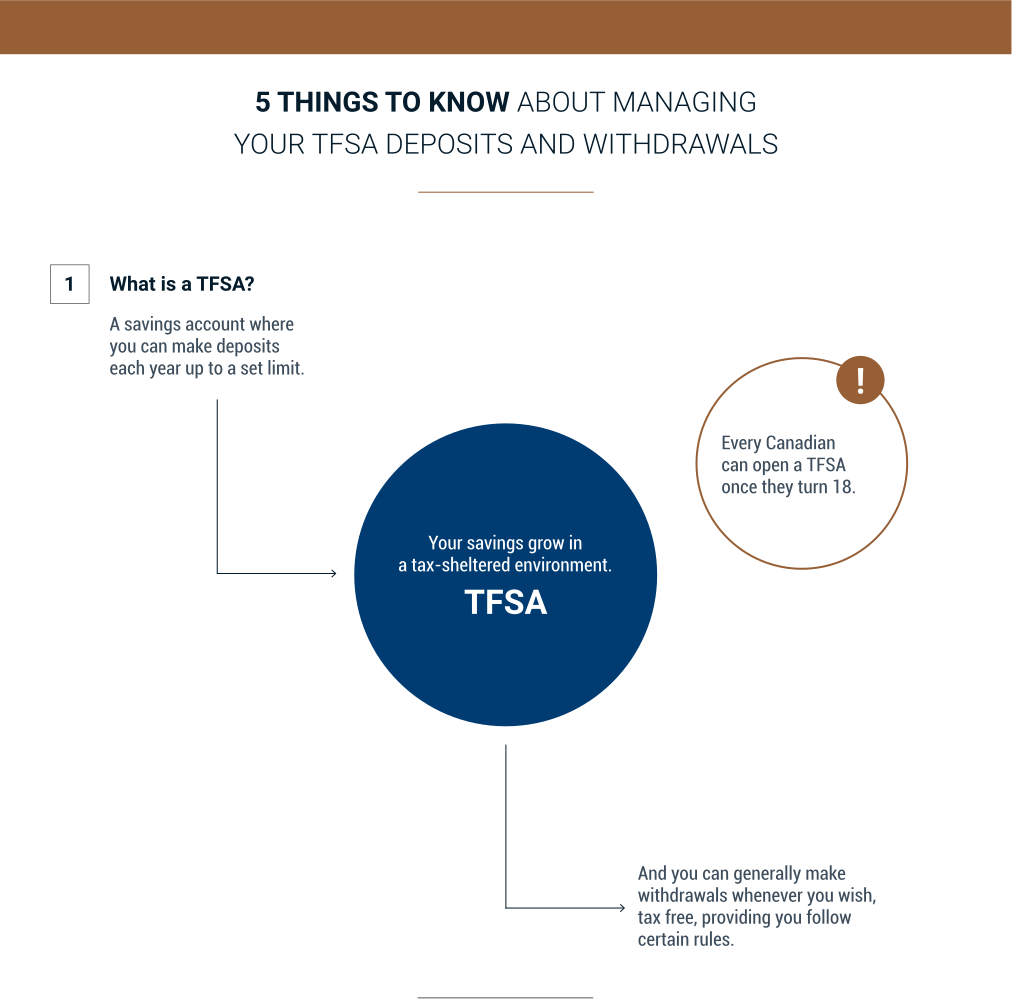
Infographic entitled:  “5 things to know about managing your TFSA deposits and withdrawals.”  This first section is marked “1” and answers the question:  What is a TFSA?”  The content explains that a TFSA (tax-free savings account) is:  “A savings account where you can make deposits each year up to a set limit.”  In the centre of the image, a large circle contains the text:  “Your savings grow in a tax-sheltered environment. TFSA”  On the lower right, a paragraph reads:  “And you can generally make withdrawals whenever you wish, tax free, providing you follow certain rules”  Graphic lines link the different elements to the central circle, illustrating that all the information applies to the TFSA.  Finally, on the right, a circle encloses the words:  “Every Canadian  can open a TFSA once they turn 18.”  Message summary:  The TFSA is a savings account with an annual contribution limit, accessible starting at age 18, where investments grow in a tax-sheltered environment and all withdrawals are tax free.
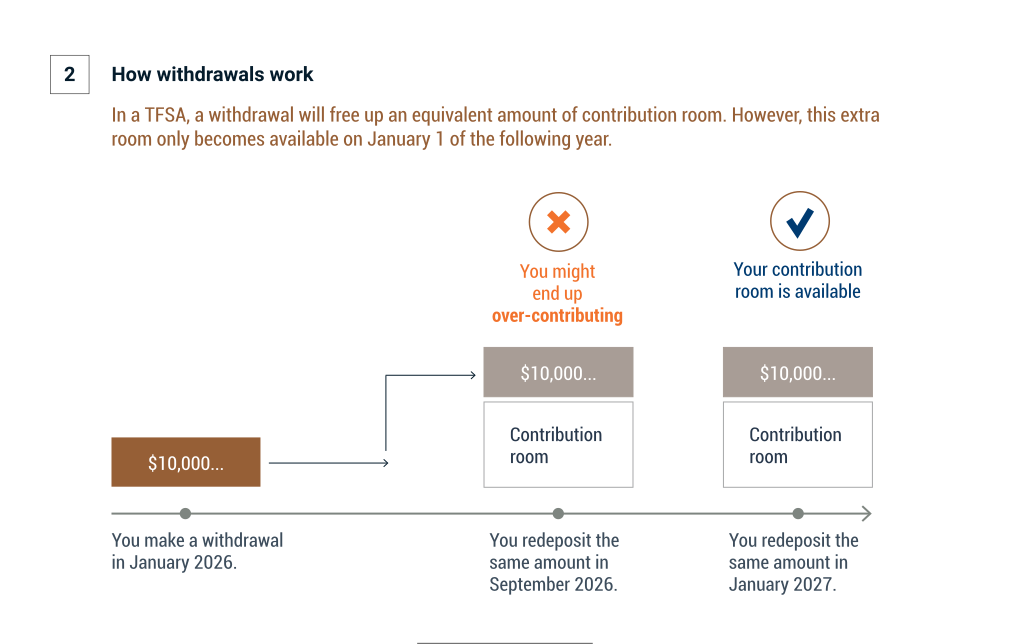
Infographic entitled:  “2 – How withdrawals work”  The main message is:  “In a TFSA, a withdrawal will free up an equivalent amount of contribution room. However, this extra room only becomes available on January 1 of the following year,”  A timeline is given to illustrate the concept:  On the left:  “You make a withdrawal in January 2026” (example: $10,000).  In the centre:  “You redeposit the same amount in September 2026.”  An error symbol (x) indicates:  “You might end up over-contributing”  This means that the contribution room linked to the withdrawal is not yet available in the same year.  On the right:  “You redeposit the same amount in January 2027.”  A checkmark indicates:  “Your contribution room is available”  The redeposit is now allowed with no tax consequences.  Message summary:  A TFSA withdrawal frees up equivalent contribution room, but only as of January 1 of the following year. Redepositing the money too soon could result in excess contributions.
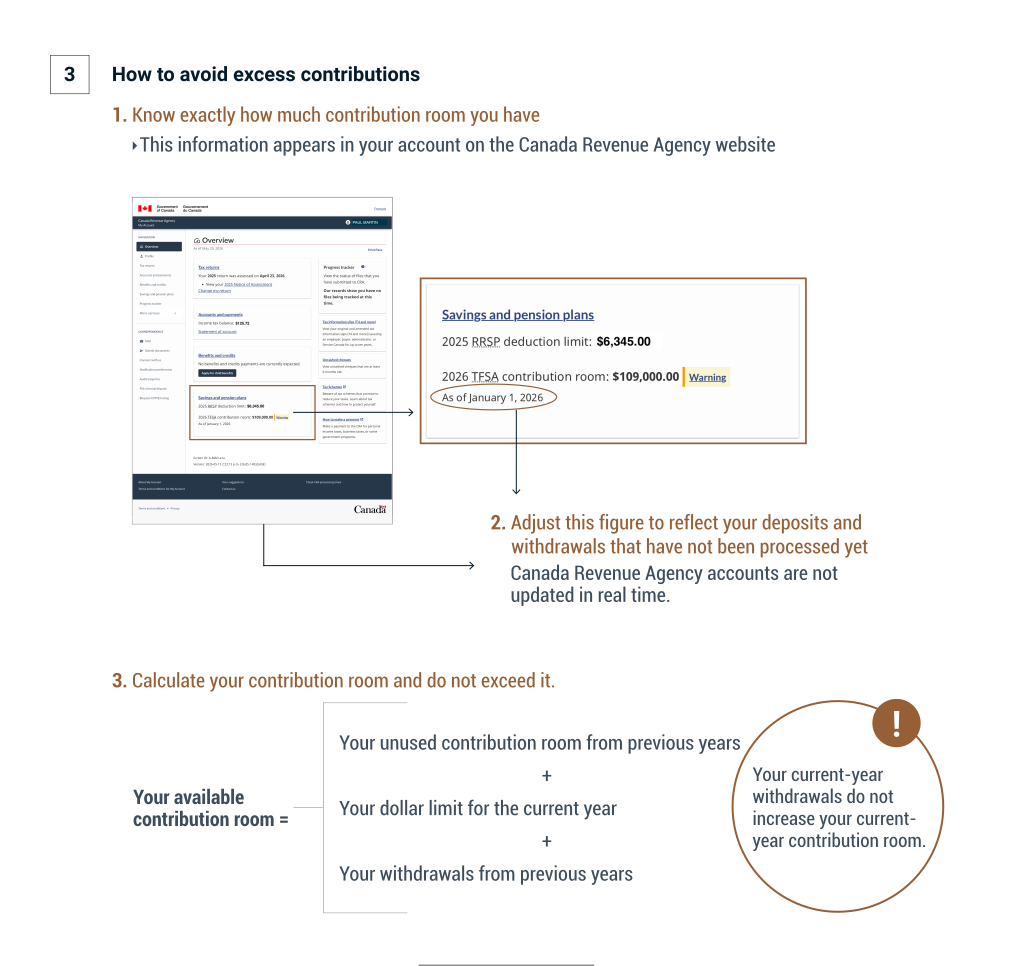
Infographic entitled:  “3 – How to avoid excess contributions”  Three main recommendations are presented.  1. Know exactly how much contribution room you have  The image shows an example of  a Canada Revenue Agency online account.  A square highlights the section called “Savings and pension plans,” where you can find:  your RRSP deduction limit (example: $6,345.00 for 2025)  your TFSA contribution room (example: $109,000.00 for 2026)  A note specifies that the data is valid “As of January 1, 2026.”  2. Adjust this figure to reflect your recent transactions  A paragraph indicates that the contribution room shown should be adjusted for recent deposits and withdrawals, because:  “Canada Revenue Agency accounts are not updated in real time.”  3. Calculate your contribution room and do not exceed it  A formula is presented for determining your contribution room:  “Your contribution room =  your unused contribution room from previous years  your dollar limit for the current year  your withdrawals from previous years”  A circle encloses this warning:  “Your current-year withdrawals do not increase your current-year contribution room.”  Message summary:  To avoid TFSA over-contributions, you need to check your contribution room with the CRA, adjust the amount for recent transactions, then correctly calculate your limit, taking the rules into account, notably the fact that current-year withdrawals do not create new contribution room until the following year.
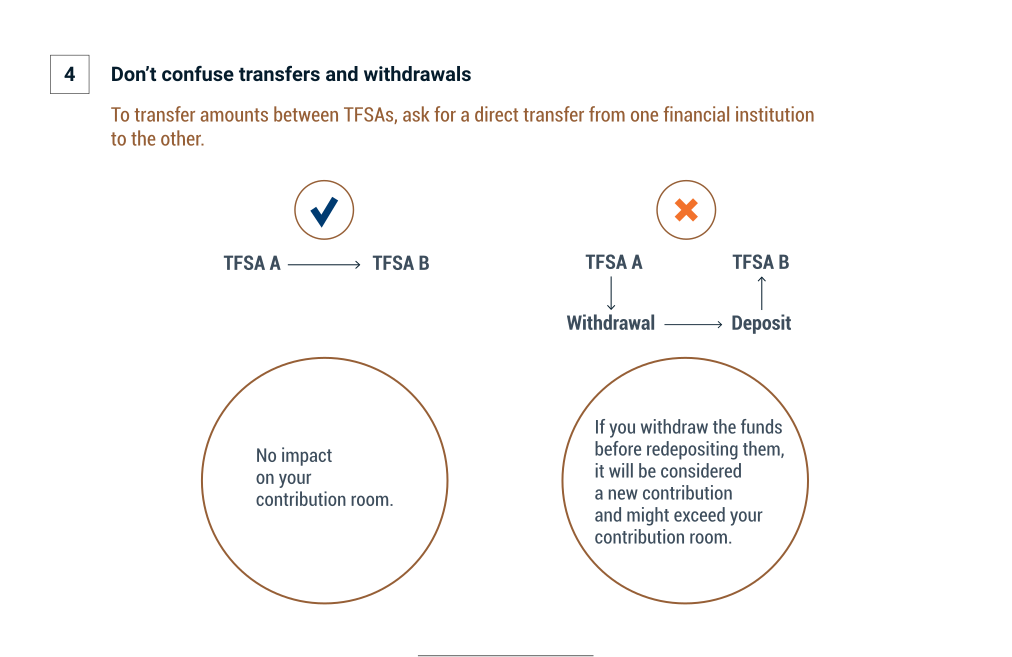
Infographic entitled:  “4 – Don’t confuse transfers and withdrawals”  The main message says:  “To transfer amounts between TFSAs, ask for a direct transfer from one financial institution to the other.”  The image compares two situations.  On the left (right way):  A checkmark accompanies a diagram where funds go directly from “TFSA A” to “TFSA B”.  A circle encloses the words:  “No impact on your contribution room.”  On the right (wrong way):  An error symbol (x) accompanies a diagram where the funds are first withdrawn from “TFSA A” and then redeposited in “TFSA B”.  The process is described as:  “Withdrawal” followed by “Deposit”.  A circle encloses the words:  “If you withdraw the funds before redepositing them, it will be considered a new contribution and might exceed your contribution room.”  Message summary:  A direct transfer between two TFSAs does not affect contribution room. However, if funds are withdrawn and subsequently redeposited, this is treated as a new contribution and may result in excess contributions.
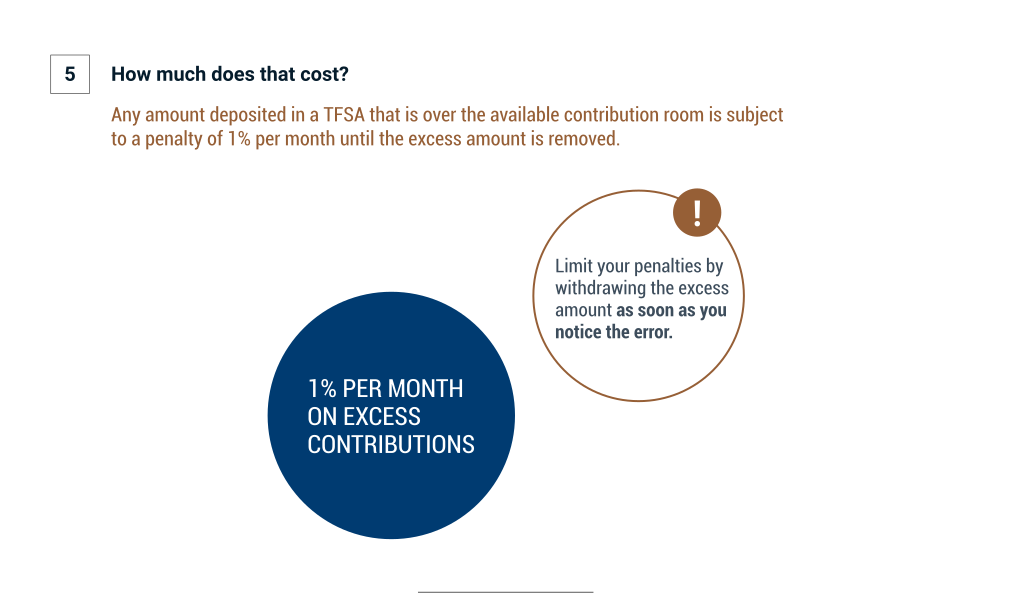
Infographic entitled:  “5 – How much does that cost?”  The main message says:  “Any amount deposited in a TFSA that is over the available contribution room is subject to a penalty of 1% per month until the excess amount is removed.”  In the centre of the image, a large circle shows the rate:  “1% per month”  On the right, a circle encloses this warning:  “Limit your penalties by withdrawing the excess amount as soon as you notice the error.”  Message summary:  Excess contributions in a TFSA result in a monthly penalty of 1%, applied as long as the excess amount remains in the account. It is important to withdraw any over-contributions quickly to reduce costs.
End banner containing a message.  Text displayed:  “The TFSA is a simple tool, but its rules may lead to costly errors. You can avoid most of these by being careful about withdrawals and transfers, and by keeping track of your contribution room. Ask your advisor to help you gain some insight.”  Message summary:  Even if the TFSA seems simple, a good grasp of the rules and close monitoring are essential to avoid costly errors. Guidance from an advisor is recommended.

The following sources were used to prepare this article:

Autorité des marchés financiers, “TFSA – Tax-Free Savings Account.”

Desjardins, “Tax-free savings account (TFSA)”; “TFSAs: What You Need To Know”; “CELI : attention aux cotisations excédentaires !.”

Finance et investissement, “Les cotisations excédentaires aux CELI ont entraîné 166,2 M$ en pénalités en 2024.” 

Government of Canada, “Tax-free Savings Account (TFSA).”